Summary
Table of Content

Farnesene Market
Get a free sample of this report
Form submitted successfully!
Error submitting form. Please try again.
Thank you!
Your inquiry has been received. Our team will reach out to you with the required details via email. To ensure that you don't miss their response, kindly remember to check your spam folder as well!
Request Sectional Data
Thank you!
Your inquiry has been received. Our team will reach out to you with the required details via email. To ensure that you don't miss their response, kindly remember to check your spam folder as well!
Form submitted successfully!
Error submitting form. Please try again.
Farnesene Market Size
The global farnesene market was valued at USD 180.3 million in 2025. The market is expected to grow from USD 215.8 million in 2026 to USD 1.1 billion in 2035, at a CAGR of 19.9%, according to latest report published by Global Market Insights Inc.
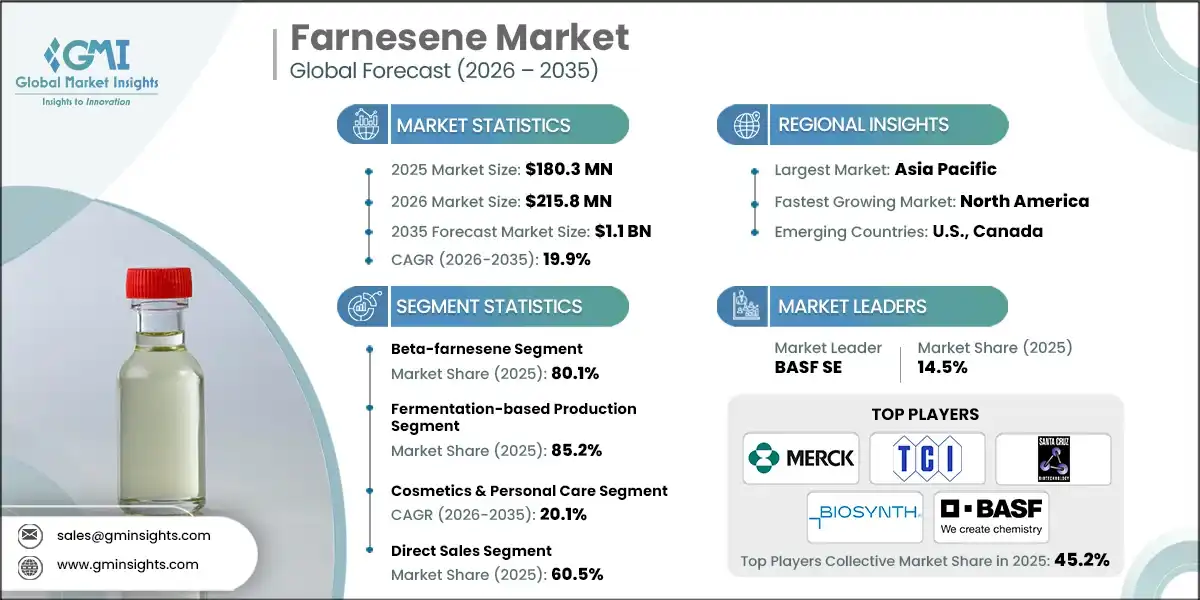
To get key market trends
- The market is on a major growth spurt, propelled by its applications across a multitude of industries. Farnesene, being a natural sesquiterpene hydrocarbons, is mostly derived from renewable sources such as sugarcane and other biomass. This has led to a global tilt towards sustainable and eco-friendly products.
- Farnesene is an important key raw material in the manufacture of fragrance, flavoring, and medicinal uses; its natural aroma profile makes it highly desirable in the flavor and fragrance industry-clean, citrusy aroma that enhances product appeal. Additionally, farnesene has antioxidants and antimicrobial functionalities, which favor its application in cosmetics and personal care products for better shelf life and skin benefits. In addition, farnesene is environmentally friendly and renewable; therefore, it appeals to consumers' choices of sustainable products, adding to the demand for the product.
- It is also gaining increasing traction for the manufacture of sustainable bio-based alternatives, such as biodegradable plastics and cleaning agents. Besides, farnesene finds use in the pharmaceutical industry for the synthesis of several therapeutic compounds, opening more areas in its market. Furthermore, the increasing trend toward natural and organic products in all industries is estimated to further increase the demand for farnesene.
Farnesene Market Report Attributes
| Key Takeaway | Details |
|---|---|
| Market Size & Growth | |
| Base Year | 2025 |
| Market Size in 2025 | USD 180.3 Million |
| Market Size in 2026 | USD 215.8 Million |
| Forecast Period 2026 - 2035 CAGR | 19.9% |
| Market Size in 2035 | USD 1.1 Billion |
| Key Market Trends | |
| Drivers | Impact |
| Rising demand for natural and sustainable products | Consumers increasingly prefer eco-friendly and natural ingredients, boosting demand for bio-based Farnesene in fragrances, cosmetics, and cleaning products. |
| Expansion of bio-based and green chemistry initiatives | Companies are adopting sustainable practices, investing in renewable raw materials like Farnesene to meet regulatory requirements and environmental standards. |
| Application in pharmaceuticals and personal care | The growing use of farnesene in cosmetics, skincare, and pharmaceuticals due to its antioxidant and antimicrobial properties fuels market growth. |
| Pitfalls & Challenges | Impact |
| High production costs | The extraction and synthesis of farnesene from renewable sources can be expensive, impacting profit margins and market competitiveness. |
| Limited raw material supply | Dependence on biomass sources like sugarcane can lead to supply chain disruptions due to environmental factors or agricultural limitations. |
| Opportunities: | Impact |
| Innovations in bio-based production technologies | Advancements in fermentation and biotechnological methods can reduce costs and increase yields, making Farnesene more commercially viable. |
| Emerging markets in personal care and pharmaceuticals | Increasing demand in developing regions presents opportunities for market expansion and diversification. |
| Market Leaders (2025) | |
| Market Leaders |
14.5% market share |
| Top Players |
|
| Competitive Edge |
|
| Regional Insights | |
| Largest Market | Asia Pacific |
| Fastest growing market | North America |
| Emerging countries | U.S., Canada |
| Future outlook |
|
What are the growth opportunities in this market?
Farnesene Market Trends
- The market is growing dynamically owing to technological advancement, transforming regulations, and ongoing innovation in products. Among the recent technological advancements, the greatest potential has come out in improving the efficiency of biobased production methods. The fermentation technologies utilizing genetically modified microorganisms, enhanced yield and reduced production costs, made farnesene commercially competitive. These technologies allow upscaling and large-scale sustainable production, following the trend of a global shift toward green chemistry.
- Regulatory frameworks have also established stronger support for bio-based and natural ingredients; alongside many regions having some standardizations for renewable chemicals, governments and regulatory bodies encourage people to adopt sustainable raw primary materials by policies and incentives.
- Product innovation has continued to shape the whole market scenario of farnesene. Companies are making new derivatives and formulations to broaden aspects of application. Farnesene's natural smelling power and antimicrobial property have been tapped into organic perfumery, skincare, and haircare products mainly in fragrance and cosmetic industries. Added, innovators seek to have more potential uses of the substance in biodegradable plastics, green cleaning agents, and in pharmaceutical products to add value and versatility to the compound. These innovations address rising consumer demand for sustainable and multifunctional products.
Farnesene Market Analysis

Learn more about the key segments shaping this market
Based on product type, the market is segmented into alpha-farnesene, beta-farnesene. Beta-farnesene dominated the market with an approximate market share of 80.1% in 2025 and is expected to grow with a CAGR of 20% by 2035.
- Increasing demand for the compound has arisen in the fragrance and cosmetic industries as alpha-farnesene continues to earn its consumers with the natural woody note it possesses. Another constituent factor for its application into sustainable fragrances and personal care products is the development of consumers toward products with natural ingredients and environmentally friendly credentials. In addition, the use of alpha-farnesene as an intermediate in synthesizing other bio-based chemicals enhances its market potential.
- With beta-farnesene gaining traction mostly in agriculture as a natural insect repellent and plant defense compound it is proving appealing because of its ecological properties and biodegradability in sustainable agricultural and pest control solutions. The increasing focus on organic farming and the need to reduce chemical pesticide usage drive the demand for beta-farnesene-based bio-pesticides. In addition, beta-farnesene is actively being investigated for applications in flavoring, fragrance, and biofuels, thus opening new growth prospects. Market trends are leaning toward bio-based renewable chemicals with varying applications, which positions beta-farnesene as one very versatile compound.
Learn more about the key segments shaping this market
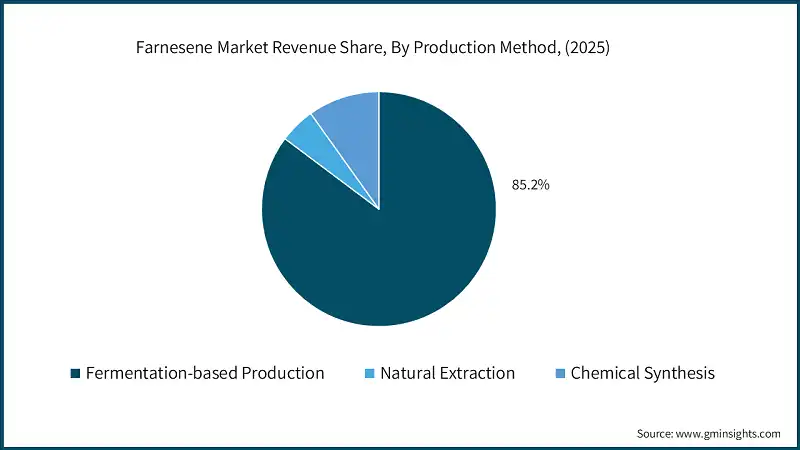
Based on production method, the farnesene market is segmented into fermentation-based production, natural extraction, chemical synthesis. Fermentation-based production form held the largest market share of 85.2% in 2025 and is expected to grow at a CAGR of 19.9% during 2026-2035.
- Fermentation has been emerging as the most advanced process in the market owing to its application in biotechnology. Genetically modified microorganisms convert renewable feed stocks such as sugars and biomass into farnesene by this bio-route. This method is in line with the worldwide trend toward eco-friendly and cost-effective manufacturing and aims to decrease the dependence on fossil fuels, and chemical synthesis. This method is preferred for producing highly purified, natural-grade farnesene fit for cosmetics, fragrances and bio-based materials.
- Natural extraction, steeped in tradition and considered very noble because of its purity and natural label, shares a very small part of the market because of its limitations. The extraction of farnesene from plant sources like apples, soybeans, or other botanicals is labor-intensive, costly, and limited in yield. The growth of this market is hindered by scalability, yet it remains of significance for premium natural product lines.
- Chemical synthesis involves sophisticated chemical reactions, synthesizing farnesene from petrochemical precursors. Although cheaper and ideal for mass production, its environmental footprint and shift toward sustainability in chemistry have been slowing its future market potential.
Based on application, the farnesene market is segmented into cosmetics & personal care, fuel applications, lubricants & functional fluids, flavors & fragrances, solvents & industrial cleaners, and others. Cosmetics & personal care segment dominated the market with an approximate market share of 40.2% in 2025 and is expected to grow with a CAGR of 20.1% by 2035.
- Cosmetics & personal care is the emerging growth application of farnesene under preference because its population is increasing because of the concept of nature and sustainability. Farnesene's sweet odor, skin-friendly and excellent eco-friendliness is increasing its demand in perfumes, skincare, and haircare products. As global consumers are continually seeking natural alternatives in their daily products, attracting manufacturers to adopt farnesene in their formulations, it surely contributes to the growing demand for organic and clean-label products.
- Although fuel applications are currently a small segment, they are showing interest, with researchers looking at bio-based farnesene as a renewable feedstock for biofuels. Its chemical structure enables it to be converted into biofuels that can replace conventional gasoline and jet fuels. With these efforts toward sustainable energy solutions, plus governmental incentives for biofuel development, it is expected that at increasing levels in geographical regions focused on reducing carbon emissions and undertaking the switch to renewable energy.
- Farnesene is gaining importance in lubricants and functional fluids because of its antioxidative and biodegradable properties. It is used to form eco-friendly lubricants and specialty fluids that meet stringent environmental regulations. Heightened demand comes from the automotive and industrial sectors, both of which are looking for alternative uses provided by sustainable technology in comparison to those that are usually petroleum based.
- The flavors and fragrances are great markets for farnesene with the raising demand in consumers for natural and organic fragrances. Manufacturers want to convert their products with fragrance to a state much closer to nature as consumers are moving to natural and away from synthetic chemicals. Innovation continues in this area, expanding newly found uses for farnesene and underpinning market development.
Based on distribution channel, the farnesene market is segmented into direct sales, distributors & wholesalers, and online platforms. Direct sales segments dominated the market with an approximate market share of 60.5% in 2025 and is expected to grow with a CAGR of 20.2% by 2035.
- Direct sales make it possible for the user to have direct control over the quality of the product, custom features, and relationship with consumers. The demand for high-purity bio-based farnesene is increasing, especially in applications like cosmetics, fragrances, and even for industrial uses; at this point, companies rely on direct sales to provide that exactness in the delivery and solutions.
- Distributors and wholesalers play a critical role in expanding markets for farnesene, as well as enhancing distribution infrastructure in the less developed outskirts of the world. This channel comes with more benefits including wide geographical coverage, inventory management, and even bulk buying, which all assist in making farnesene reachable to small and medium-sized enterprises.
- Online platforms are emerging distribution channels for farnesene owing to the digital transformation of the chemical and bio-based industries. The e-commerce platforms allow manufacturers and distributors to access customers anywhere in the world rapidly and cost-effectively. They bring in value such as convenience, equality, and availability of many product specification documents, certifications, and technical data.
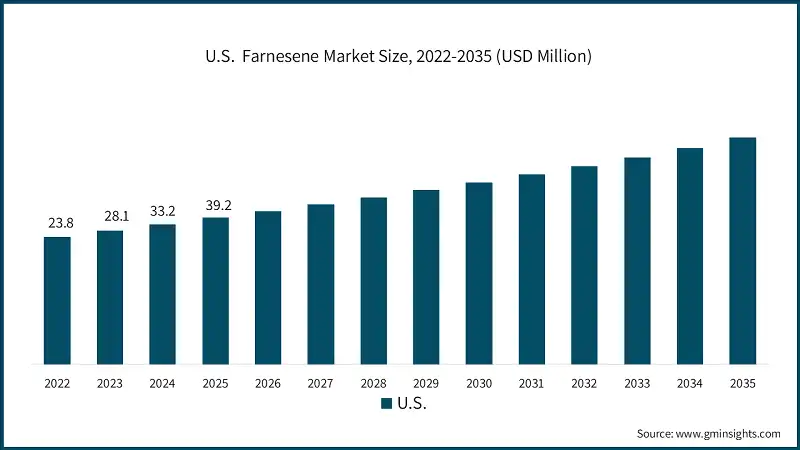
Looking for region specific data?
The North America farnesene market is growing rapidly on the global level with a market share of 27.2% in 2025.
- North America is fast emerging as one of the most prominent markets for farnesene, and the main driver of this market is the demand for natural and sustainable ingredients in cosmetics and personal care, as well as increasingly worthy applications in industrials. Stringent environmental regulations within the region coupled with the consumer trend towards eco-friendliness drive the willingness of manufacturers to adopt farnesene as a renewable alternative to synthetic chemicals. Also, the presence of advanced research capability among major chemical and bio-based companies is a contributor to innovation and market development in North America.
Europe farnesene market leads the industry with revenue of USD 39.3 million in 2025 and is anticipated to show lucrative growth over the forecast period.
- The market for farnesene belongs to a booming European economy, which has had a great deal of regulatory support as well as consumer inclination toward natural and organic products. The region has given rise to its own stringent European Union regulations on chemicals and a great emphasis on green chemistry that encourages the uses of bio-based ingredients like farnesene in almost all industries that include cosmetics, fragrances, and even industrial applications.
The Asia Pacific farnesene market is anticipated to grow at a CAGR of 20% during the analysis timeframe.
- Asia Pacific is arising as a key focus for the future growth of farnesene, accelerated by increasing industrialization, an expanding cosmetics and personal care industry, and rising awareness of environmental issues. Countries like China, India, and Japan have seen sharp increases in natural ingredient requirement, which act as a catalyst for the adoption of farnesene in many applications. The large population base and a growing middle class with disposable income foster the expansion of the market. Furthermore, local producers and escalating investments to establish a bio-based industry are enhancing the regional supply chain, thus establishing Asia Pacific as one of the major growth drivers of farnesene.
Latin America farnesene market accounted for 10% industry share in 2025 and is anticipated to show steady growth over the forecast period.
- Latin America is gradually adopting the farnesene trend, boosted by relative intensification of concern for sustainability and natural product formulations. The cosmetics and personal care industries have increased with increased consumer awareness and preference for organic, and environmentally friendly ingredients in the region. The trend still stands-to-emergent for the market, yet the indications highlight great growth potential as sectors in the region adopt more sustainable practices.
Middle East & Africa farnesene market accounted for 5.9% industry share in 2025 and is anticipated to show lucrative growth over the forecast period.
- The Middle East and Africa (MEA) region is emerging in the farnesene adoption and, thus far, it has largely been by the expanding cosmetics and personal care sectors in some countries, as well as rising public awareness of sustainability. As awareness and technology transfer improves, MEA is expected to gradually develop into a niche but growing market for farnesene applications.
Farnesene Market Share, 2025
The top five companies in farnesene industry include Merck KGaA, TCI (Tokyo Chemical Industry), Santa Cruz Biotechnology, Biosynth, and BOC Sciences. These are prominent companies operating in their respective regions covering approximately 45.2% of the market share in 2025. These companies hold strong positions due to their extensive experience in market. Their diverse product portfolios, backed by robust production capabilities and distribution networks, enable them to meet the rising demand across various regions.
- BASF SE is a specialized chemical player that offers a broad array of bio-based and specialty chemicals. The strength of the company lies in its portfolio which is extensive, pricing which is competitive, and above all distributing its products globally. The company's resourcefulness in customer service and affordability gives it a competitive advantage to serve the interests of large corporations and equally small-and-medium enterprises within the market.
- Merck KGaA is a major player worldwide. Its considerable portfolio of high-quality chemicals and biochemicals including farnesene and its bio-based derivatives, makes this company a strong contender in the market. Merck's vast distribution network stringent quality measures and innovative approach toward product development ensure a preferred image in the farnesene marketplace.
- Tokyo Chemical Industry implements its advanced development in bio-based and specialty chemicals. Having a strong footing in the Asia-Pacific region, TCI handles a broad portfolio of chemicals, including farnesene, with an emphasis on sustainability and the environment.
- Santa Cruz Biotechnology specializes in research-grade biochemicals such as natural compounds and bio-based chemicals. Its competitive advantage is its reputation for quality and capacity to offer customized solutions to academic, pharmaceutical, and industrial research markets. It has carved out a niche positioning that allows Santa Cruz to meet specialized needs within the farnesene ecosystem.
- Biosynth specializes in natural and bio-based chemicals while promoting sustainability and innovation. The firm produces a collection of bio-derived chemicals such as farnesene emphasized on environmentally friendly sourcing and manufacturing processes. Biosynth achieves a competitive advantage through its sustainable mindset, adaptable production capabilities, and extensive portfolio die-hard appeal to the cosmetics, fragrances, and other industrial sectors seeking natural alternatives.
Farnesene Market Companies
Major players operating in the farnesene industry include:
- Alfa Chemistry
- BASF SE
- Biosynth
- BOC Sciences
- Clearsynth
- Glentham Life Sciences
- LGC Limited
- Merck (Sigma-Aldrich)
- Paraíso Bioenergia
- Santa Cruz Biotechnology
- TCI (Tokyo Chemical Industry)
Farnesene Industry News
- In October 2025, BASF Aroma Ingredients launched Isobionics Natural alpha-Farnesene 95, a high-purity, natural lime flavor ingredient produced via advanced fermentation technology. This addition completes the Isobionics natural flavor portfolio for lime applications, highlighting BASF’s focus on innovative, sustainable biotech solutions for the flavor industry.
- In March 2021, DSM acquired Amyris's flavor and fragrance bio-based intermediates business, enhancing its sustainable ingredient portfolio. This strategic move strengthens DSM's position in bio-based solutions for flavors and fragrances, aligning with its commitment to sustainability and innovation. The acquisition allows DSM to expand its product offerings, leverage Amyris's technology, and meet increasing demand for eco-friendly ingredients in the market.
This Farnesene market research report includes in-depth coverage of the industry, with estimates & forecasts in terms of revenue (USD Million) and volume (Kilo Tons) from 2026 to 2035, for the following segments:
Market, By Product Type
- Alpha-farnesene
- Beta-farnesene
Market, By Production Method
- Fermentation-based production
- Natural extraction
- Chemical synthesis
Market, By Application
- Cosmetics & personal care
- Skincare applications
- Haircare applications
- Color cosmetics
- Fuel applications
- Aviation fuel
- Diesel & marine fuel
- Lubricants & functional fluids
- Flavors & fragrances
- Natural flavoring agent
- Lime flavor & citrus applications
- Fragrance additive applications
- Solvents & industrial cleaners
- Others
Market, By Distribution Channel
- Direct sales
- Distributors & wholesalers
- Online platforms
The above information is provided for the following regions and countries:
- North America
- U.S.
- Canada
- Europe
- Germany
- UK
- France
- Spain
- Italy
- Rest of Europe
- Asia Pacific
- China
- India
- Japan
- Australia
- South Korea
- Rest of Asia Pacific
- Latin America
- Brazil
- Mexico
- Argentina
- Rest of Latin America
- Middle East and Africa
- Saudi Arabia
- South Africa
- UAE
- Rest of Middle East and Africa
Frequently Asked Question(FAQ) :
Who are the major players in the farnesene market?
Key players in the farnesene industry include Alfa Chemistry, BASF SE, Biosynth, BOC Sciences, Clearsynth, Glentham Life Sciences, LGC Limited, Merck (Sigma-Aldrich), and Paraíso Bioenergia.
What are the key trends driving the farnesene market?
Key trends include advancements in fermentation technologies, regulatory support for bio-based ingredients, and the global shift toward green chemistry and sustainable production methods.
What was the market share of the direct sales distribution channel in 2025?
Direct sales dominated the distribution channel segment with a 60.5% market share in 2025 and are projected to grow at a CAGR of 20.2% by 2035.
Which application segment dominated the farnesene market in 2025?
The cosmetics & personal care segment led the market with a 40.2% share in 2025 and is anticipated to grow at a CAGR of 20.1% by 2035.
Which region held the largest share of the farnesene market in 2025?
North America accounted for 27.2% of the global market in 2025, driven by strong demand for sustainable products and advancements in production technologies.
What was the market share of beta-farnesene in 2025?
Beta-farnesene dominated the market with an approximate share of 80.1% in 2025 and is projected to grow at a CAGR of 20% by 2035.
Which production method held the largest market share in 2025?
Fermentation-based production accounted for the largest market share of 85.2% in 2025 and is expected to grow at a CAGR of 19.9% from 2026 to 2035.
What was the market size of the farnesene market in 2025?
The global market was valued at USD 180.3 million in 2025, driven by advancements in biobased production methods and increasing demand for sustainable raw materials.
What is the projected value of the farnesene market by 2035?
The market is expected to reach USD 1.1 billion by 2035, growing at a CAGR of 19.9% during the forecast period, fueled by technological innovations and supportive regulatory frameworks.
Farnesene Market Scope
Related Reports